Surreal Software's 1999 classic — its history, how the press received it, how it plays today, and what a copy costs.

- Released
- 1999 · PC (DOS / Windows)
- Developer
- Surreal Software
- Publisher
- Psygnosis Limited
- MobyScore
- ★ 7.98
The history
Developed by Surreal Software and published by Psygnosis in 1999, Drakan: Order of the Flame arrived as a showcase for the studio's proprietary Riot Engine, which had been developed in 1996. The game tells the tale of Rynn, a young warrior who bonds with the legendary dragon Arokh to rescue her kidnapped brother from the evil war mage Navros and his army of Wartocks.
The title mattered as it provided Surreal Software with its first taste of critical acclaim. By blending high-fantasy storytelling with a technical focus on seamless transitions between outdoor and indoor environments, it established a unique identity in the action-adventure space at the turn of the millennium.
How it plays
The core loop centers on the alternating perspectives of its two protagonists. Players control Rynn on foot, engaging in hack-and-slash combat with swords and bows against enemies like giant spiders, scavengers, and Wartocks, often while exploring dungeons. When the action shifts to the skies, players take direct control of Arokh, utilizing his fiery breath as a weapon in aerial dogfights with other dragons.
This duality is supported by a unique engine that blends indoor and outdoor scenes seamlessly. To aid the player's journey, the game features a well-planned map updating feature and a specialized inventory system.
How it was received
Drakan was generally well-received upon release, earning a favorable 81% on GameRankings. High marks came from Allgame (4.5/5), IGN (8.1/10), and GamePro (4/5), while Edge gave it a 7/10. The game sold 180,000 copies, though some critics had reservations; Dan DiGiacomo of InQuest Gamer noted that Rynn's movement felt "rather sluggish" and described the dragon-riding as a "cool concept executed with moderate success." Jeff Lundrigan of NextGen was more enthusiastic, calling the experience "great, great stuff," even if it wasn't the "end-all and be-all" he had hoped for.
In the magazines
The period press.
The game saw a wide spread of scores across the press: CNG gave it 8/10, CGSP and CGW both awarded 4/5, NGen gave 4/5, and PCA provided a 7/10. PCGUS was more critical, scoring it at 69%.
The box & the art
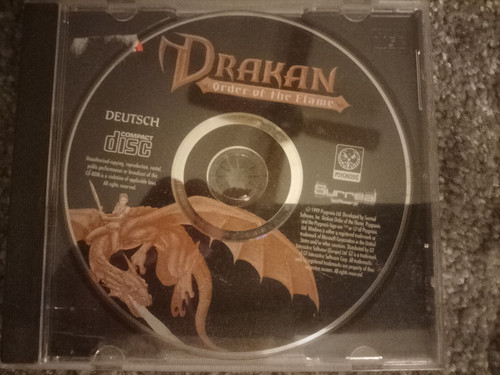
Cover art, and real copies photographed in the wild.


Legacy
Surreal Software followed this success with the 2002 sequel, Drakan: The Ancients' Gates, with both titles eventually selling in excess of 250,000 units. The game remains worth seeking out today for its ambitious blending of ground-based action and aerial combat.
What it's worth
Copies surface on the second-hand market from time to time, but listings are sparse enough that there's no reliable price band to quote — check the live search for what's available right now.
See current copies on eBay →Copies in the wild
Real listing photos — the range of condition you'll meet.
Photographed examples from past listings — illustrative of condition, not a live inventory.
How to play it in 2026
Easiest today: GOG or the original disc under DOSBox. Either way the core game is intact.
Verdict
While some movement may feel sluggish by modern standards, the concept of bonding with a dragon remains a compelling draw. The seamless transition between Rynn's swordplay and Arokh's aerial assaults provides a variety of gameplay that still feels distinct.
Sources: MobyGames, Steam, and period/web coverage. Prices reflect the second-hand market and change over time.