Westwood Associates' 1996 classic — its history, how the press received it, how it plays today, and what a copy costs.

- Released
- 1996 · PC (DOS / Windows)
- Developer
- Westwood Associates
- Publisher
- Electronic Arts
- MobyScore
- ★ 8.18
- Players today
- Very Positive on Steam (84% of 6265)
The history
Developed by Westwood Associates and published by Electronic Arts, Command & Conquer: Red Alert arrived in 1996 as a twist on the formula established by its predecessor. Originally planned as a prequel to the first Command & Conquer, it eventually evolved into its own series, presenting an alternate history where Albert Einstein travels back in time to eliminate Adolf Hitler. This intervention prevents the rise of Nazi Germany but allows Joseph Stalin and the Soviet Union to expand unchecked across Europe.
The game mattered by expanding the scope of the series' warfare to include both air and sea, while rebalancing gameplay to ensure players couldn't simply rely on the same tactics used in the original. It served as a benchmark for the real-time strategy genre during a period of high market saturation, effectively eclipsing its predecessor in the eyes of many critics.
How it plays
The core loop involves gathering ore via harvesters to fund the construction of power plants, unit production facilities, and research buildings. Players manage a base from a semi-top-down isometric perspective, producing combat units to achieve specific victory conditions. The experience is split between large-scale outdoor battles and special indoor operations where players control small infantry squads without the ability to build bases.
Strategic variety is driven by faction asymmetry: the Allied forces prioritize speed, advanced technology, and naval dominance with units like spies and gunboats, while the Soviet forces rely on brute strength, heavy tanks, and submarines. High-tier superweapons provide a climactic edge, with the Soviets utilizing nuclear missiles and the Allies employing the Chronosphere to teleport units across the map.
How it was received
Red Alert was a commercial powerhouse, selling 1.5 million copies in its debut month and reaching nearly two million by mid-February 1997. In the US, it was the seventh-best-selling computer game of 1996 and the eighth-best of 1997, with lifetime domestic sales reaching 869,623 copies by September 1999. It also earned a "Platinum" award from the VUD for selling at least 200,000 units in Germany, Austria, and Switzerland. Critically, it was highly praised, earning a 91% on GameRankings (PC) and 90/100 on Metacritic (PC). It won the Game Developers Conference 1996 Spotlight Award for "Best Strategy/War Game" and Computer Gaming World's Readers' Choice Strategy Game of the Year.
Then and now, the sentiment remains overwhelmingly positive; while period critics lauded its balance and design, modern Steam players continue to rate it as "Very Positive," often citing it as a childhood staple.
In the magazines
The period press.
Next Generation gave the PC version 4/5, noting it enhanced graphics and expanded warfare. GameSpot's Vince Broady praised the "karmic balance" of unit design, while Rob Smith of PC Games (and GamePro) noted that the great story and mission variety made up for limited improvements in the A.I.
What players say today
Modern players on Steam maintain a "Very Positive" sentiment (5266/6265 positive), with many recalling the game as their first introduction to the RTS genre. Reviews frequently highlight the soundtrack and the performance of Tim Curry in the live-action cutscenes, though some admit the game is "flawed" while remaining incredibly fun.
“Downloaded again just to play as the Soviets again He may be gone but will forever be in this masterpiece Rest in peace Tim Curry”
“I'm escaping, to the one place that hasn't been corrupted by Capitalism.... SPACE! RIP Tim Curry.”
“This game is flawed But ♥♥♥♥ IS IT FUN This and Kane's Wrath will always be a staple of my childhood and my first introduction to RTS Games. The campaigns are fun. And ♥♥♥♥♥♥♥♥♥. The soundtrack for th…”
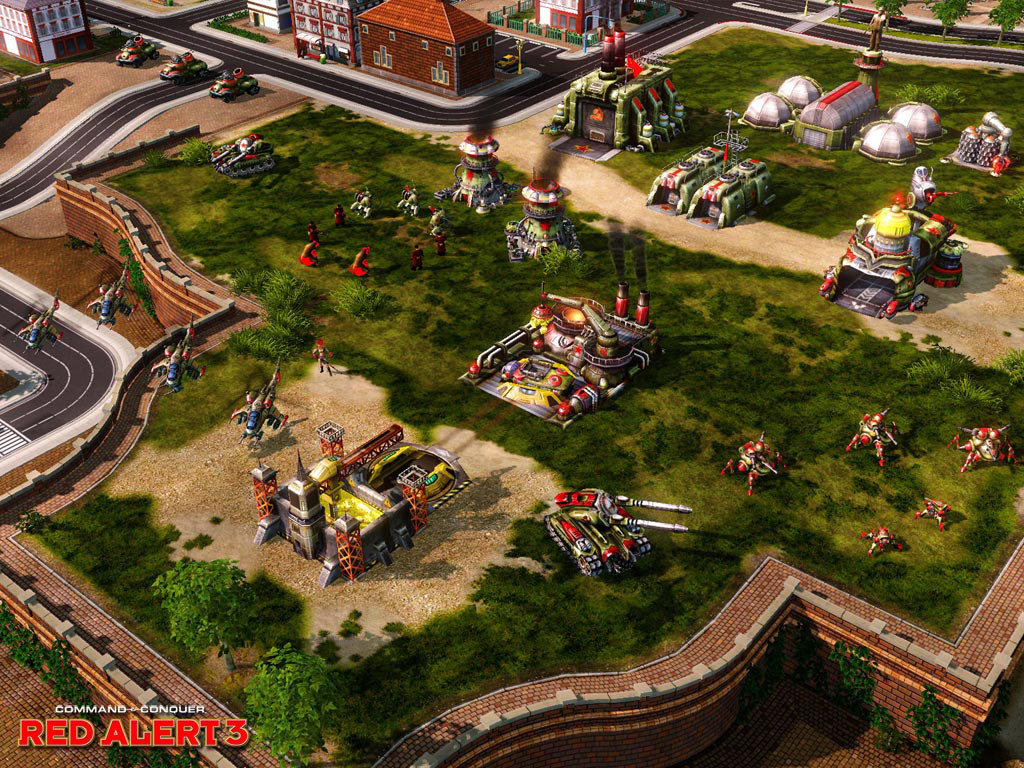
Screenshots
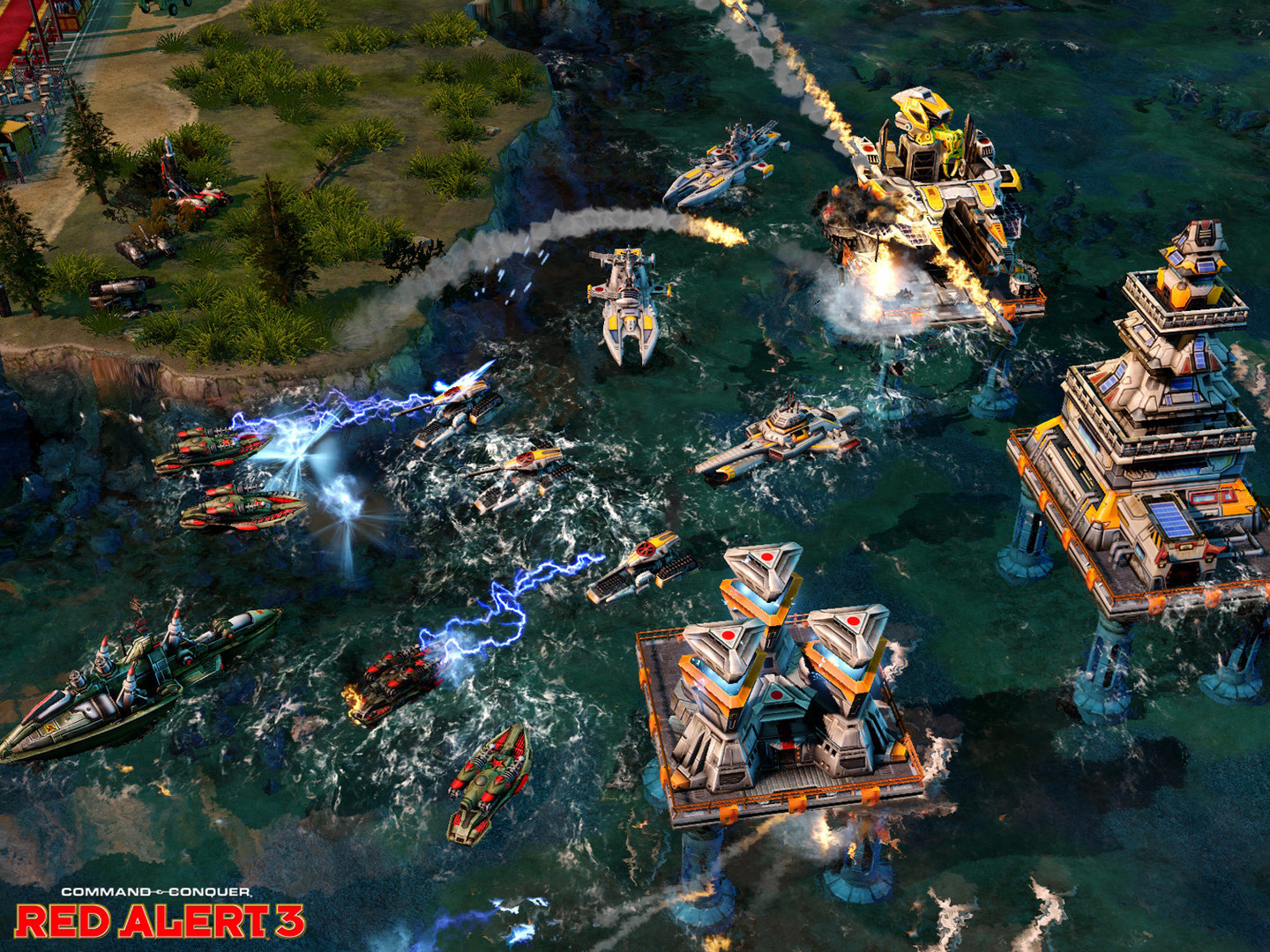
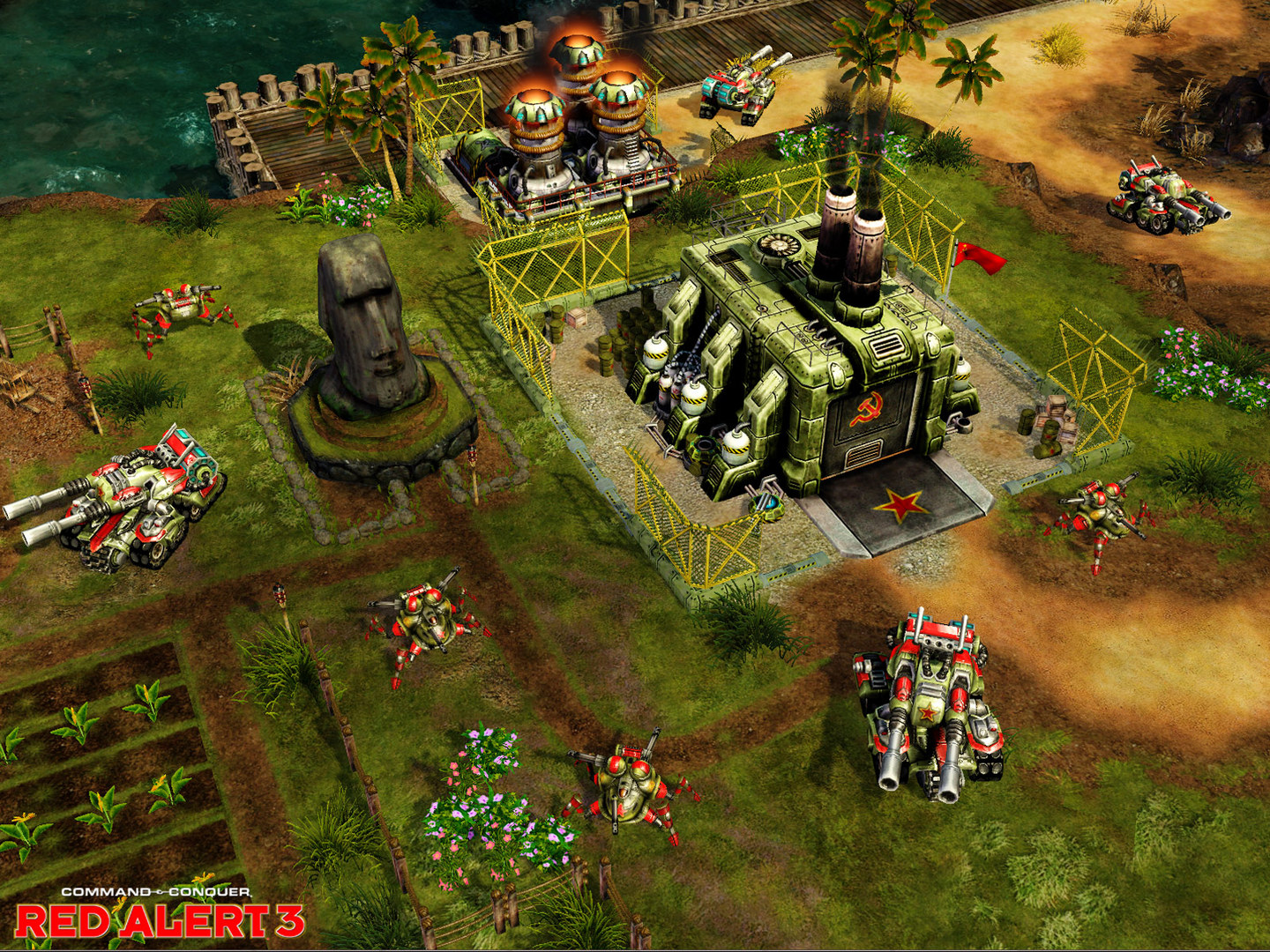
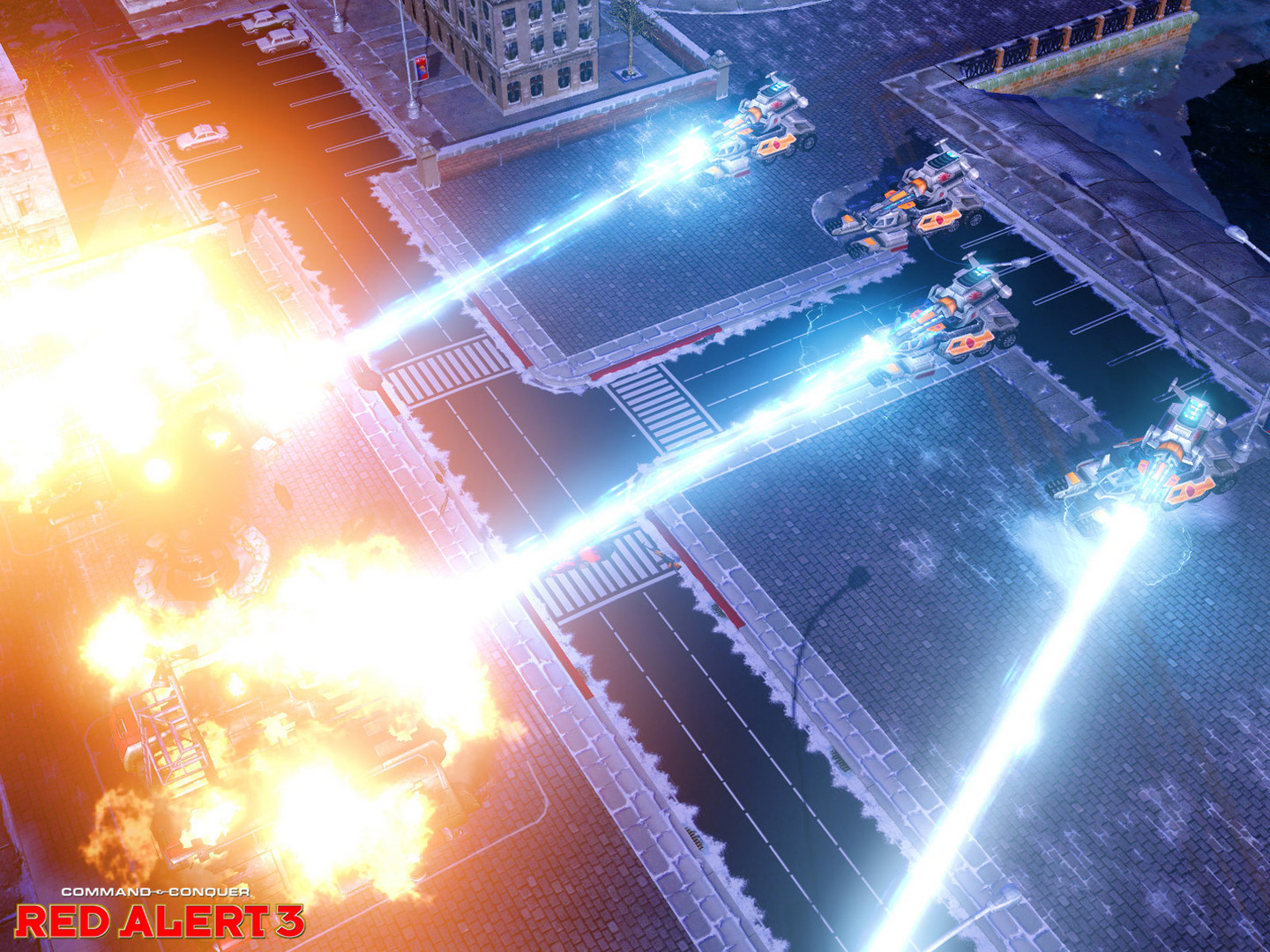
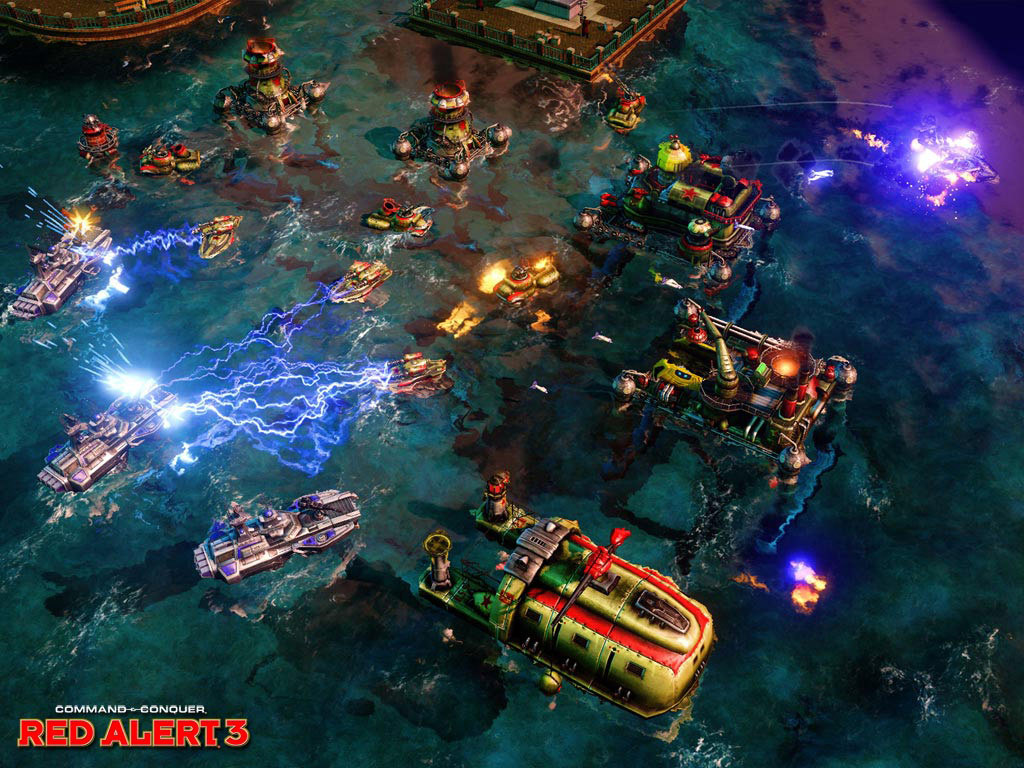
The box & the art
Cover art, and real copies photographed in the wild.


Legacy
Westwood Associates continued to shape the RTS landscape, and Red Alert remains a cornerstone of the franchise. It is worth seeking out today for its imaginative alternate-history campaign and the distinct, asymmetric balance between its two warring factions.
What it's worth
Copies surface on the second-hand market from time to time, but listings are sparse enough that there's no reliable price band to quote — check the live search for what's available right now.
See current copies on eBay →Copies in the wild
Real listing photos — the range of condition you'll meet.


Photographed examples from past listings — illustrative of condition, not a live inventory.
How to play it in 2026
Easiest today: Steam or GOG (DRM-free) on modern Windows. Either way the core game is intact.
Verdict
Despite some modern complaints about a "dumb" A.I. that can either be easily conquered or become overbearing, the game holds up as a masterclass in atmospheric RTS design. The blend of live-action storytelling and sprite-based combat creates a specific charm that is rare in contemporary titles.
Whether you are playing for the nostalgic soundtrack or the strategic tension of a Chronosphere teleport, it remains a definitive example of 90s PC gaming that delivers on its promise of chaotic, large-scale war.
Sources: MobyGames, Steam, and period/web coverage. Prices reflect the second-hand market and change over time.