MicroProse's 1995 classic — its history, how the press received it, how it plays today, and what a copy costs.

- Released
- 1995 · PC (DOS / Windows)
- Developer
- MicroProse
- Publisher
- MicroProse Software
- MobyScore
- ★ 8.17
- Players today
- Very Positive on Steam (91% of 611)
The history
Released in 1995 and developed by MicroProse Ltd., X-COM: Terror from the Deep serves as the direct follow-up to X-COM: UFO Defense. Set in the year 2040, the game envisions a world where aliens have returned 40 years after their previous defeat, this time launching a powerful second front from the depths of the Earth's oceans to exploit a weakened planet.
The title mattered as it attempted to expand the series' scope by shifting the battlefield to a new dimension. While it maintained the core identity of its predecessor, it pushed the boundaries of the franchise's resource management and tactical combat by introducing undersea warfare.
How it plays
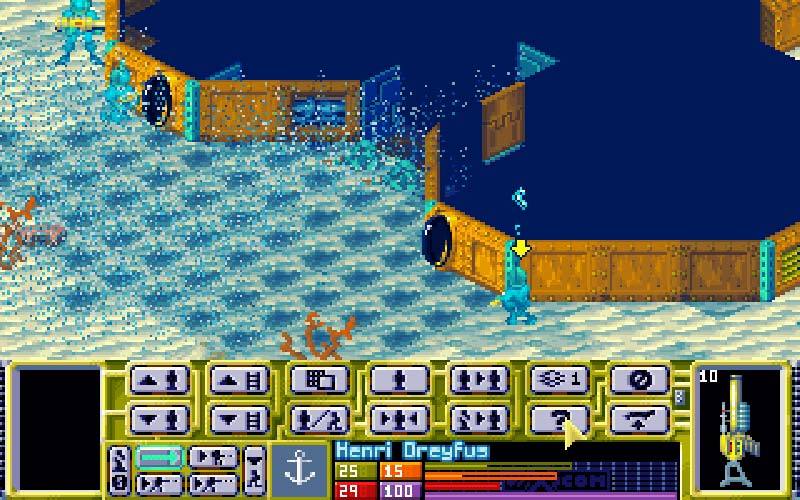
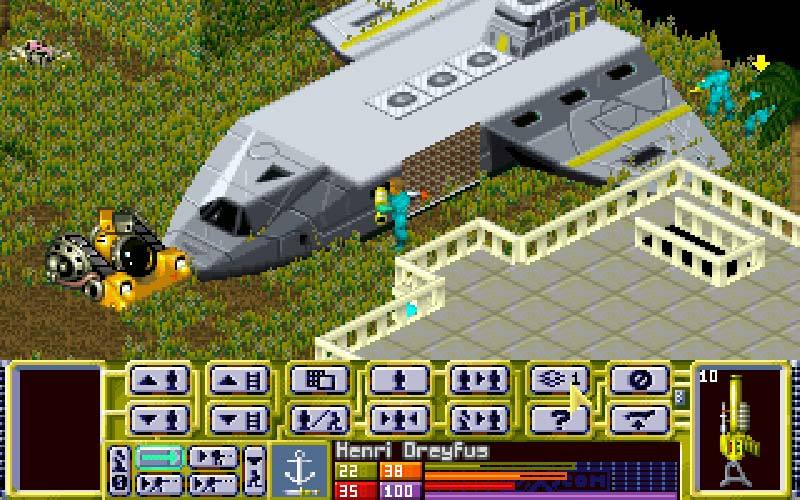
The game is a blend of strategy and turn-based tactics, utilizing an isometric perspective and a free camera. The core loop involves resource management and tactical combat, mirroring the original X-COM in its user interface and weapon systems, but adapting them for an aquatic environment. This includes the introduction of new hand-to-hand weapons specifically for underwater use.
Players engage in both undersea and on-land missions. However, the experience is significantly harder than the first game, featuring larger, longer, and more tedious levels—most notably cruise ships that lead designer Jake Solomon described as four times longer than any human could realistically make.
How it was received
The game was mostly very well received by critics, though some noted it was a "carbon copy" of the original. PC Gamer UK called it "not only a great sequel to UFO but a superb game in its own right," and Computer Game Review awarded it a "Platinum Triad" score. However, GameSpot argued that aside from new art and a few combat options, it was simply the same game as UFO Defense but much more difficult, a sentiment echoed by Next Generation. Combined with its predecessor, the game's sales exceeded 1 million copies by March 1997.
Then and now, the sentiment remains largely positive; while period critics like those at GameSpot and Next Generation questioned its lack of innovation, modern Steam users maintain a "Very Positive" rating.
In the magazines
The period press.
PC Zone gave the game a 94%, PCGUK awarded it 92%, and PCGUS gave it 82%. Other scores included 97/98/95 from rev1Score, a 7.2/10 from GSpot, and a 4/5 from NGen.
What players say today
Modern players on Steam view the game very favorably, with 553 out of 611 positive reviews. Some players highlight that despite the simple graphics typical of older MicroProse titles, the gameplay remains fantastic.
“These older microprose games had simple graphics but fantastic gameplay give this one a try.”
Screenshots



The box & the art
Cover art, and real copies photographed in the wild.

Legacy
Following this era, Julian Gollop founded Codo Technologies, which developed the 2002 title Laser Squad Nemesis using a combat system very similar to X-COM's Battlescape. The series eventually saw a modern revival with the 2012 XCOM: Enemy Unknown.
This title is worth seeking out today for those who enjoy a brutal challenge and the deep tactical complexity of early turn-based combat.
What it's worth
Copies surface on the second-hand market from time to time, but listings are sparse enough that there's no reliable price band to quote — check the live search for what's available right now.
See current copies on eBay →How to play it in 2026
Easiest today: Steam or GOG (DRM-free) on modern Windows. Either way the core game is intact.
Verdict
Whether it holds up depends on your tolerance for difficulty. If you enjoy the tension of high-stakes tactical combat and don't mind levels that can feel tedious or oversized, it remains an awesome experience.
However, for those seeking significant evolution over the first game, the "carbon copy" nature of the mechanics and the brutal difficulty curve may be a deterrent.
Sources: MobyGames, Steam, and period/web coverage. Prices reflect the second-hand market and change over time.