id Software's 1996 classic — its history, how the press received it, how it plays today, and what a copy costs.
- Released
- 1996 · PC (DOS / Windows)
- Developer
- id Software
- Publisher
- Infogrames Europe SA
- MobyScore
- ★ 8.3
- Players today
- Overwhelmingly Positive on Steam (96% of 12126)
The history
Developed by id Software as a follow-up to Doom and Doom II, Quake arrived in 1996 as a dark fantasy first-person shooter. Its development was marked by creative differences and internal animosity, specifically a conflict between John Carmack and John Romero that eventually led to Romero's departure from the studio after the game's release.
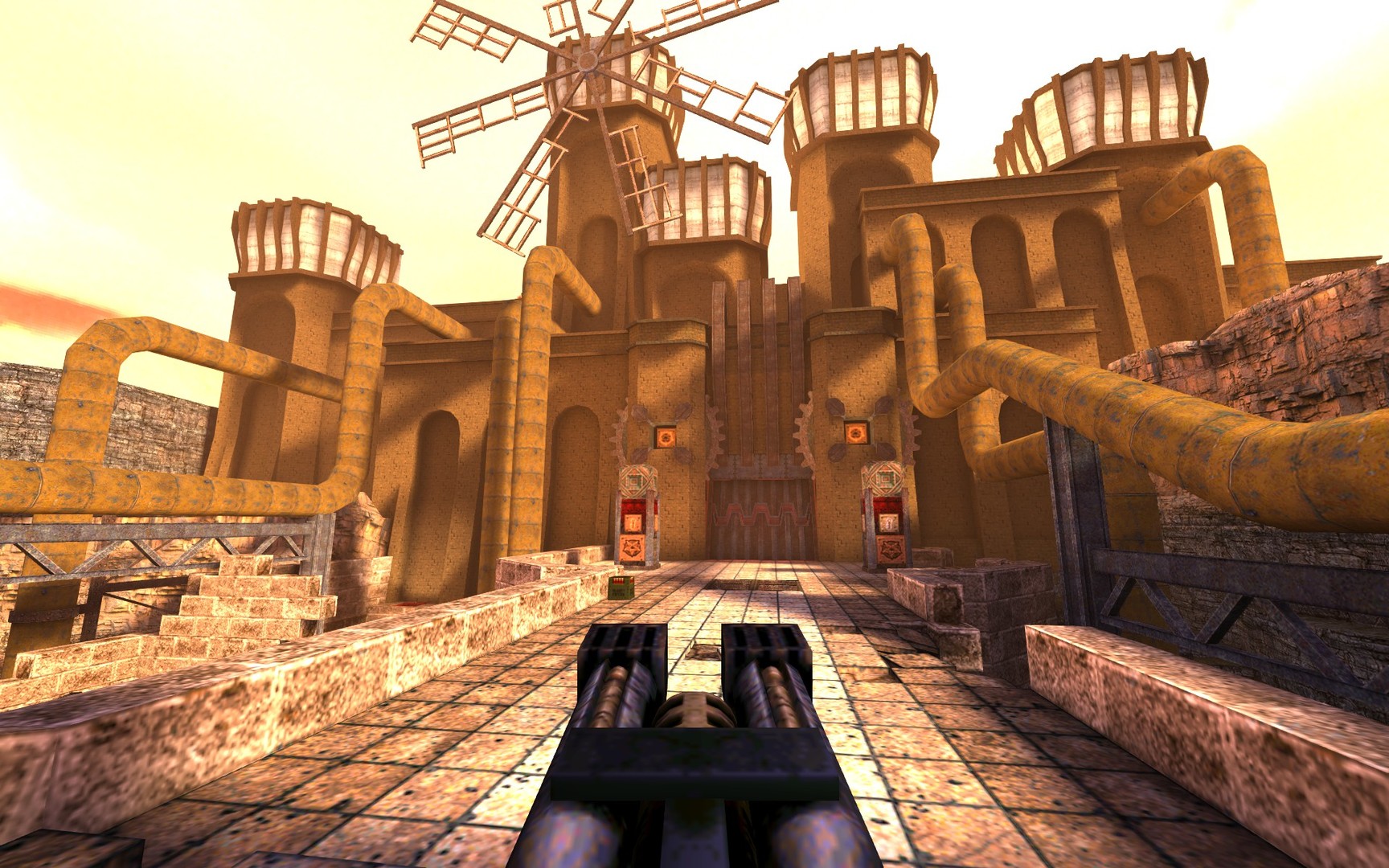
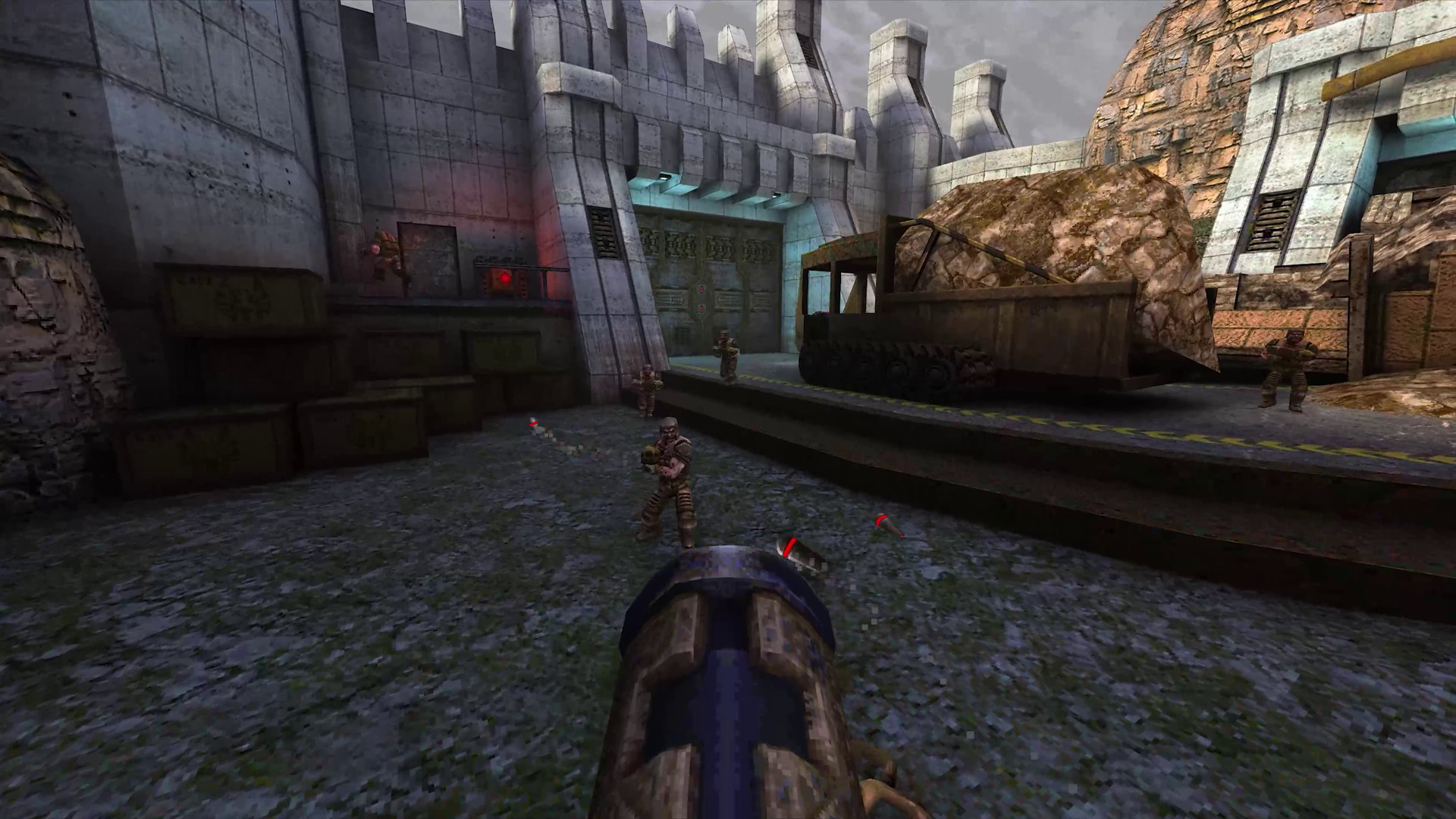
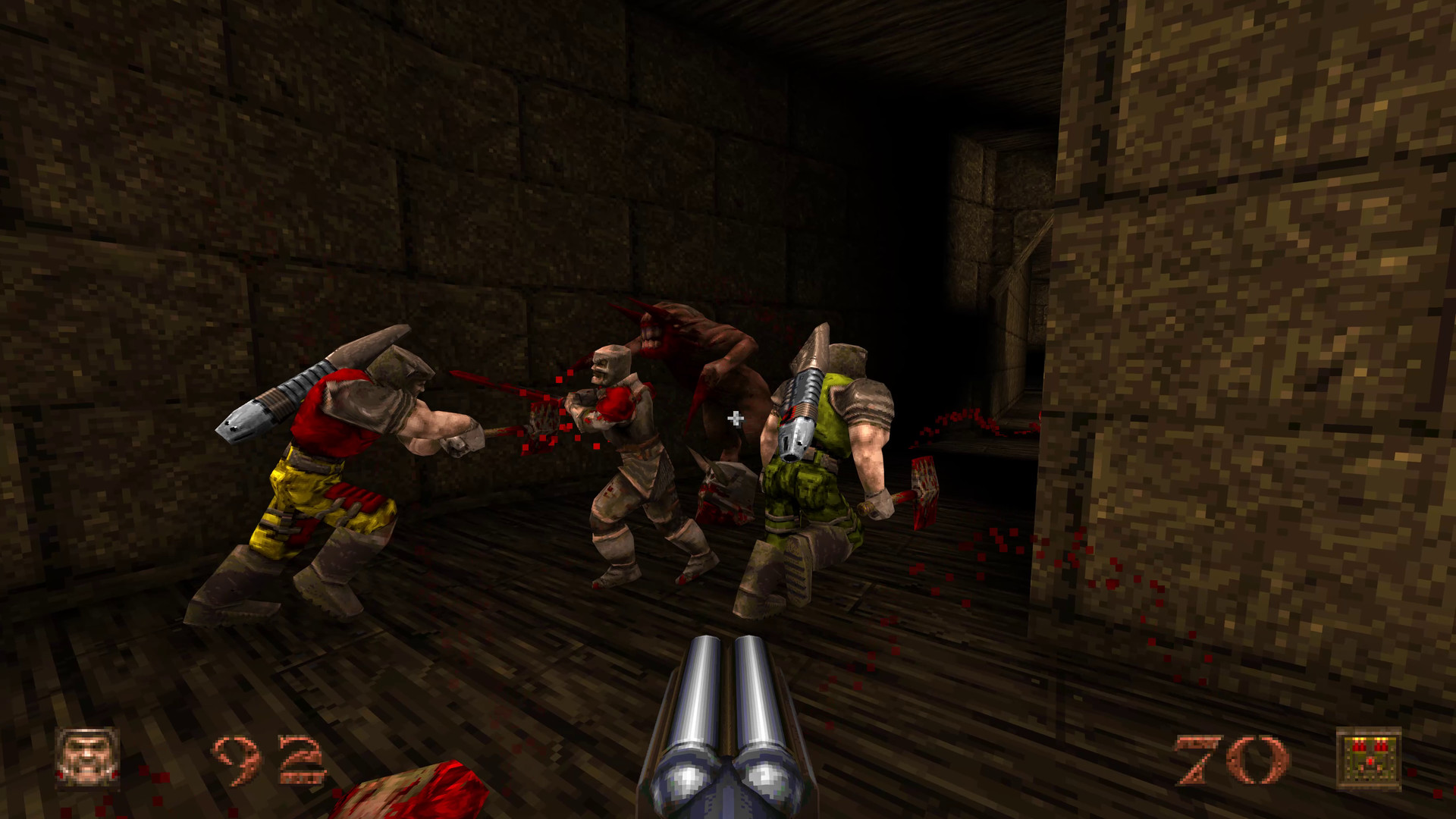
The title mattered primarily because of its technological leap; it utilized a true 3D engine where levels, enemies, and objects were constructed from polygons rather than sprites. This innovation allowed for vertical spaces, smoother animation, and a more natural approach to level design that fundamentally changed the trajectory of the genre.
How it plays
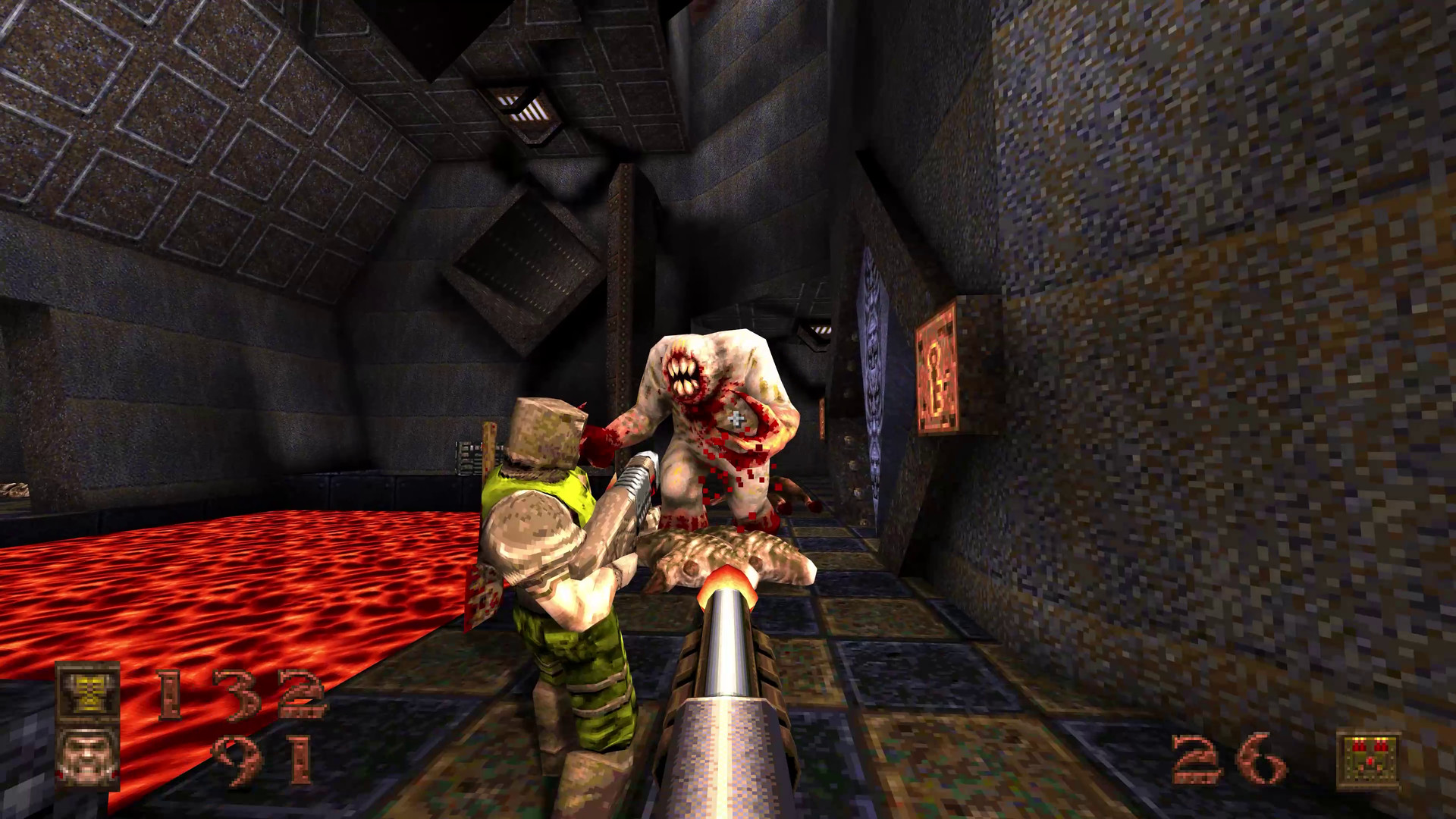
The gameplay loop casts the player as a nameless soldier fighting through four episodes to stop an interdimensional enemy codenamed "Quake." Players navigate environments ranging from military bases to gothic castles and crypts, collecting weapons, armor, and keys while hunting for exits and secret areas. Combat is brutal and fast, utilizing an arsenal that includes nailguns, rocket launchers, and the electrical Thunderbolt.
Because of the 3D engine, verticality is central to the experience, featuring lifts, jumping, and enemies attacking from above or below. Beyond the single-player campaign, Quake was designed for LAN and Internet play, becoming legendary for its deathmatch mode—supporting free-for-all, team play, and duels—which emphasized map knowledge and precise movement in three-dimensional space.
How it was received
Quake was critically acclaimed on PC, earning a 93% from GameRankings and 94/100 from Metacritic. Entertainment Weekly gave it a B+, praising the audio design, graphics, and violent action as major improvements over Doom. The game's atmosphere was highly regarded, with a Next Generation critic praising the unnerving sound effects and realistic 3D physics. In 1997, the Game Developers Choice Awards recognized the title with three spotlight awards for Best Music or Soundtrack, Best Sound Effects, and Best On-Line/Internet Game.
Reception was far more polarized on consoles. The Saturn version was largely reviled for lacking multiplayer—which critics felt was the primary reason to play—and for poor controls. While Sega Saturn Magazine gave the port a 92%, other critics noted the graphics were blurry and pixelated. Then-period critics were divided by platform, but modern Steam sentiment is overwhelmingly positive, with players viewing it as a rite of passage.
In the magazines
The period press.
Next Generation gave the Macintosh version four out of five stars, while GamePro called the game excellent despite being over-hyped. Sega Saturn Magazine awarded the Saturn port a 92%.
What players say today
Modern players on Steam describe the game as the "grandaddy of 3D boomer shooters" and a pure adrenaline experience. Sentiment is overwhelmingly positive, with users praising the "amazing" quality of life improvements and the addition of bots and a new horde mode.
“Back in that time I played, if I'm not missing any, the following computer FPS: Wolfenstein 3D, Corridor 7, Doom 2, Heretic, Duke Nuken 3D,, TekWar, Blood, Shadow Warrior. Somehow, I had never played…”
“The QoL is amazing. No need to spend hours fixing compatibility issues, unlike other retro games. Coop and free updates with new levels are a pleasant gift. It doesn't look like Bethesda, I'm utterly …”
“It is the grandaddy of 3D boomer shooters. Playing the original 4 episodes of this game is a rite of passage, if for no other reason than to learn and understand its storied and tumultuous history. …”
Screenshots

The box & the art
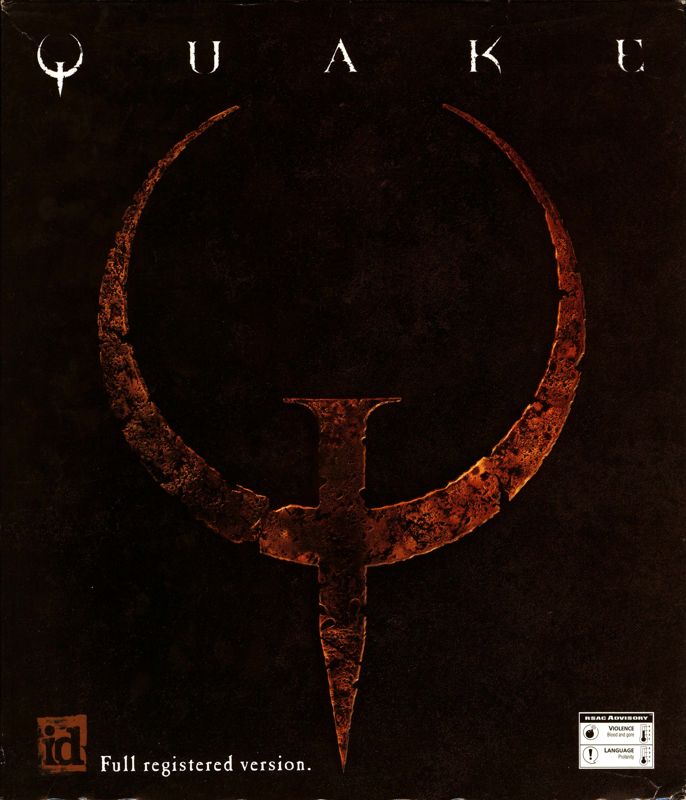
Cover art, and real copies photographed in the wild.

Legacy
id Software continued to push technical boundaries following Quake, though the development of this title saw a significant shift in the studio's internal roster. The game remains worth seeking out today as a foundational piece of FPS history that inspires modern retro-style shooters.
What it's worth
Copies surface on the second-hand market from time to time, but listings are sparse enough that there's no reliable price band to quote — check the live search for what's available right now.
See current copies on eBay →How to play it in 2026
Easiest today: Steam or GOG (DRM-free) on modern Windows. Either way the core game is intact.
The "Enhanced" version of Quake provides an updated and visually enhanced experience of the original, offering a way to play the game without spending hours fixing compatibility issues.
Verdict
Quake holds up as a brutal, atmospheric masterclass in 3D level design. While the original polygons may look obvious at close range, the core loop of fast-paced combat and the dread-inducing soundtrack by Trent Reznor and Nine Inch Nails remain effective.
Whether played for the oppressive single-player atmosphere or the high-skill ceiling of its multiplayer deathmatch, it remains an essential experience for anyone interested in the evolution of the first-person shooter.
Sources: MobyGames, Steam, and period/web coverage. Prices reflect the second-hand market and change over time.