id Software's 1999 classic — its history, how the press received it, how it plays today, and what a copy costs.

- Released
- 1999 · PC (DOS / Windows)
- Developer
- id Software
- Publisher
- Activision
- MobyScore
- ★ 8.24
- Players today
- Overwhelmingly Positive on Steam (96% of 2459)
The history
Developed by id Software and released in 1999, Quake III: Arena represents a bold departure for the series. Moving away from the story-driven structures of its predecessors, it focused exclusively on multiplayer arena fighting. This pivot placed it in direct competition with Epic Games' contemporary title, Unreal Tournament.
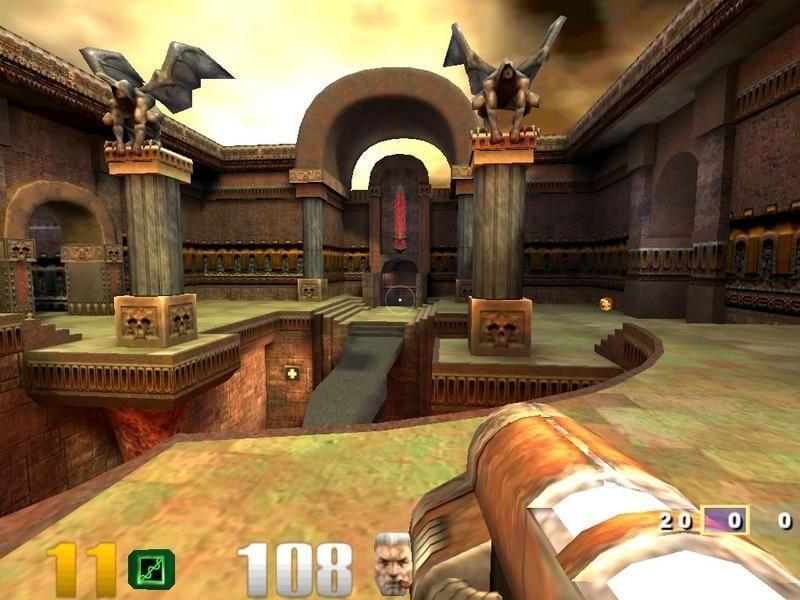
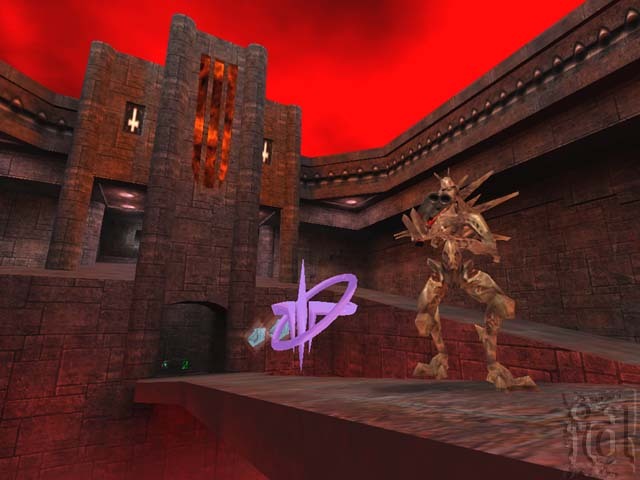
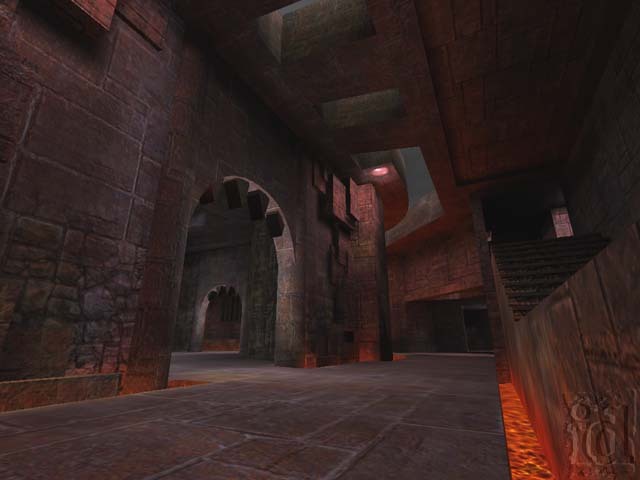
The game mattered as it largely defined the development of the online competitive battle genre. By shaking off the dominant brown and grey shades of previous titles in favor of brighter colors and a customizable 3D engine, it set a new high-water mark for 3D graphics at the time.
How it plays
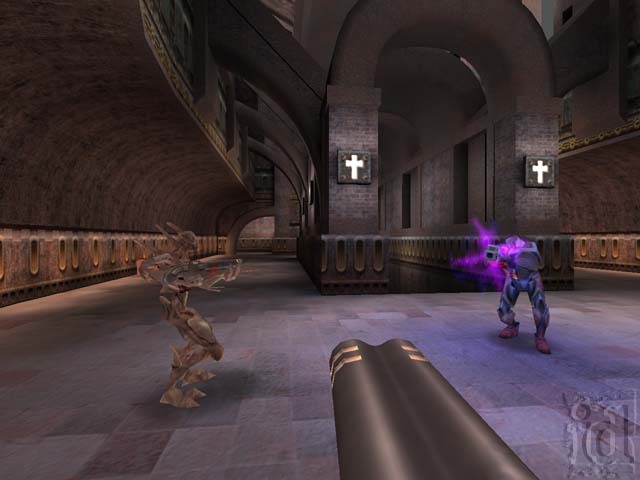
The core loop centers on fast-paced combat where players, summoned by an ancient alien race, wield an arsenal of redesigned weapons. This includes spawn weapons like the machine gun and gauntlet, as well as a shotgun, plasma gun, lightning gun, rocket launcher, railgun, and BFG. Combatants fight for glory in arenas filled with health bubbles, armor shards, and power-ups such as Quad Damage, Haste, Invisibility, and the Battlesuit.
While the offline experience consists of one-on-one and team-based challenges against AI bots of increasing difficulty, the game is built for multiplayer modes like duel, team deathmatch (TDM), and capture the flag (CTF). Movement is a critical skill; while double-jumping was removed from previous titles, advanced players utilize rocket jumping, strafing, and circle jumping to navigate the maps.
How it was received
Reception was very positive, with critics praising the game as addictive and polished. Jeff Gerstmann of GameSpot described it as "outstanding," highlighting the textures and sound effects, while Eurogamer called it "stunning" and "extremely well balanced." However, some criticism emerged regarding the narrator's voice and the frame rate on low-end systems. Metacritic recorded a 93/100 for the Dreamcast version and 84/100 for the PS2 Revolution edition. The game earned PC Gamer US's 1999 "Special Achievement in Graphics" and GameSpot's "Best Multiplayer Game" award for consoles.
Then vs Now: While period critics lauded its technical polish and deathmatch purity, modern Steam players continue to view it as an "absolute masterpiece," with an Overwhelmingly Positive rating from over 2,400 reviews.
In the magazines
The period press.
PCZone gave the PC version an 89/100, and Next Generation's Blake Fischer awarded the PC version five stars, calling it "the best deathmatch yet. Period." Next Generation also gave the Dreamcast version four stars and the PS2 version four stars, with the latter described as "easily the best shooter available for PS2." Shūkan Famicom Tsūshin gave the PS2 version a 25/40.
What players say today
Modern players on Steam describe the game as the "birth of multiplayer gaming" and one of the greatest multiplayer games ever made. Some users note that while it remains incredibly fun and a masterpiece of "testosterone," it may have contributed to a trend where developers moved away from storyline-based shooters in the Quake and Unreal series.
“Quake III Arena is probably the greatest multiplayer game ever made. Though, for modern systems, Quake Live is probably the best way to play it. The only real difference (aside from Quake Live's hundr…”
“This is genuinely the only multiplayer game that doesn't make me mad while I play. I never even get the urge to strangle my opponents. Despite coming out in 1999, it's still incredibly fun to play, an…”
“The birth of multiplayer gaming. ABSOLUTE masterpiece and OVERFLOWING testosterone.”
Screenshots
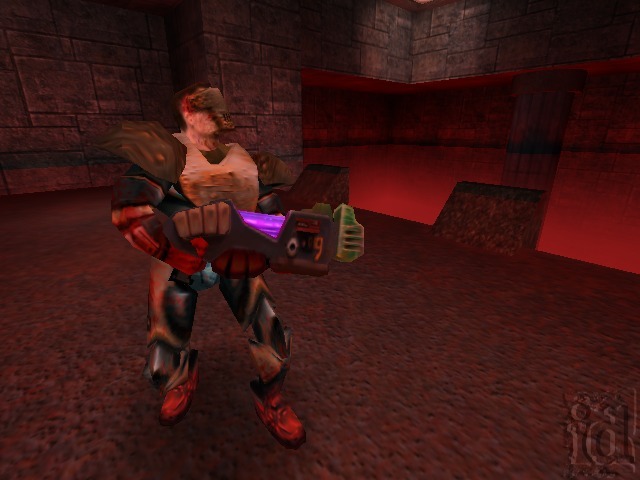
The box & the art
Cover art, and real copies photographed in the wild.


Legacy
id Software continued to push the boundaries of the FPS genre following this release. Quake III: Arena remains worth seeking out today as a definitive example of the arena shooter, having served as the foundation for professional Pro Gaming tournaments for nearly a decade due to community-driven tweaks to its netcode and tournament features.
What it's worth
A second-hand market that moves over time — a loose disc is pocket-money, while sealed or complete-with-manual copies drive the top end. For today's exact listings, check the live search.
See current copies on eBay →Copies in the wild
Real listing photos — the range of condition you'll meet.


Photographed examples from past listings — illustrative of condition, not a live inventory.
How to play it in 2026
Easiest today: Steam or GOG (DRM-free) on modern Windows. Either way the core game is intact.
Verdict
Quake III: Arena holds up as a masterclass in pure, twitch-based combat. By stripping away the narrative and focusing entirely on the mechanical synergy of movement and weaponry, it created a timeless competitive loop.
Though it lacks the storytelling of other shooters, its commitment to speed and precision ensures it remains a benchmark for the genre. For those seeking the peak of the deathmatch experience, it is still an essential piece of gaming history.
Sources: MobyGames, Steam, and period/web coverage. Prices reflect the second-hand market and change over time.